
Bunk Bed Safety: The Checklist to Run Before You Buy
By Shane Stone, CEO

Bunk bed safety comes down to a short list of checks, and most of them you can run before you ever buy. The big risks are falls and entrapment, and the federal standards (CPSC and ASTM F1427) exist to address exactly those. Here is the checklist I would run on any bunk bed before it goes in a kid's room.
What makes a bunk bed safe?
Three things do most of the work: proper guardrails, the right age on the top bunk, and a frame that is assembled and used correctly. Get those right and you have removed the large majority of the risk. The rest is good habits.
At what age can a child sleep on the top bunk?
Six years old. Both CPSC and ASTM guidance say children under 6 should not sleep on the upper bunk, and bunk beds carry a warning label to that effect. Younger kids do not yet have the coordination and caution that an elevated bed demands, so keep them on the bottom until they are old enough.
What guardrails does a bunk bed need?
This is the part people get wrong, so be specific:
- Both sides. The upper bunk needs a guardrail on each side, even the side against the wall.
- Continuous on the wall side. The wall-side rail should run end to end, so a child cannot slip into the gap between the bed and the wall.
- At least 5 inches above the mattress. Rail tops should sit no less than 5 inches above the top of the mattress, measured with the mattress you actually use.
- Gaps under 3.5 inches. Any opening should be small enough that a child's body cannot pass through.
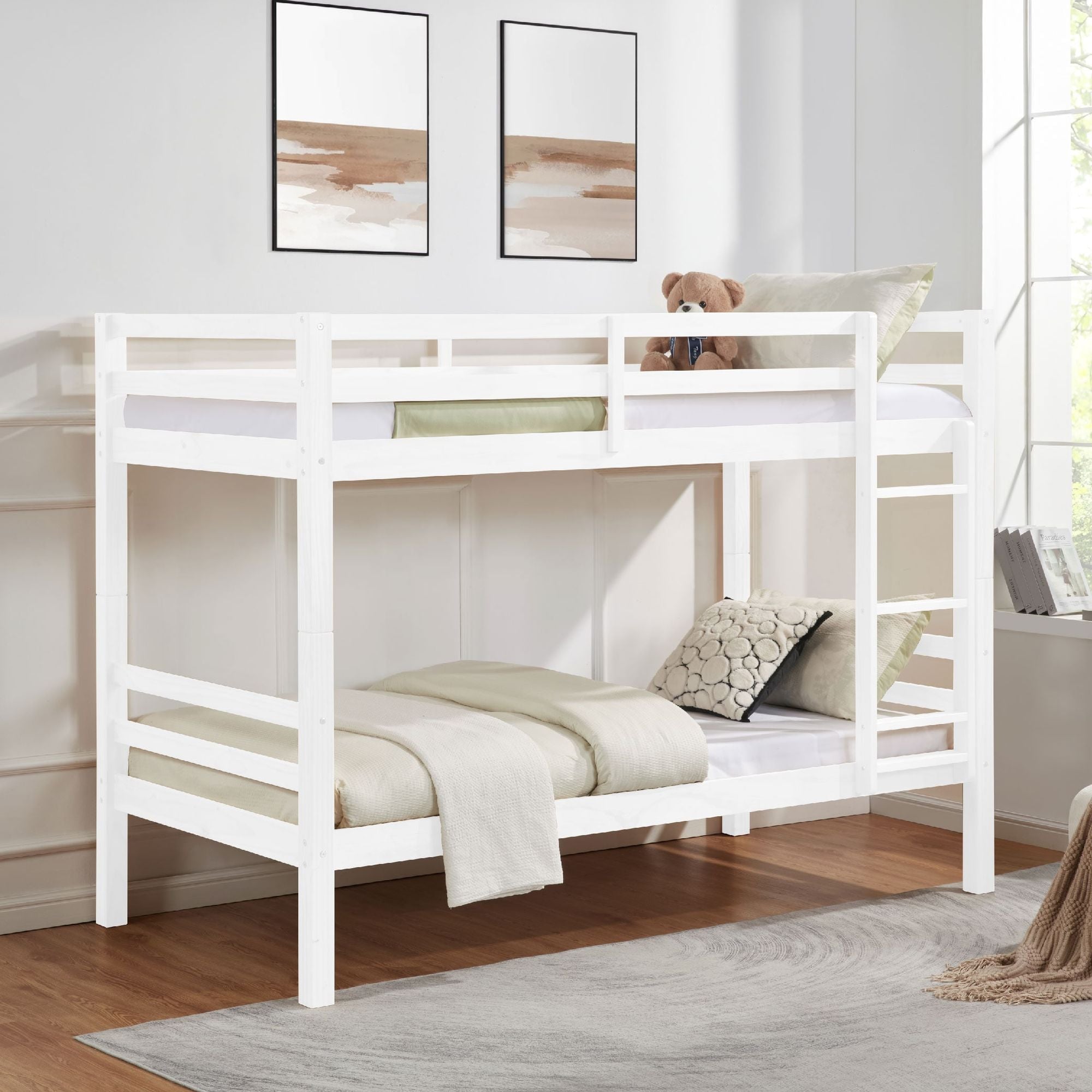
A model with high, full-length rails like our twin over twin wood bunk bed with high guardrails makes this easy to get right.
Ladder or stairs: which is safer?
For younger kids, stairs are generally easier and steadier than a ladder, because each step gives full footing. A ladder is fine too, as long as the rungs are wide and flat and the ladder is firmly attached. Whatever the access, teach one child at a time and no climbing on the outside of the frame.
What setup and habits prevent most falls?
- Assemble it fully and correctly. Use every bolt and tighten everything. Re-check the hardware every few months.
- Mind the mattress thickness. A mattress that is too thick eats into the guardrail height. Keep the rail line well above the mattress top, and check the maximum mattress height on the product page.
- No horseplay up top, and no jumping. A nightlight or a clip-on light makes nighttime trips down safer.
- Confirm the weight limit for each bunk before you buy, and do not exceed it.
Run this list and you have covered the failure points that cause the most bunk bed injuries. Buy on the safety basics first, then the style.